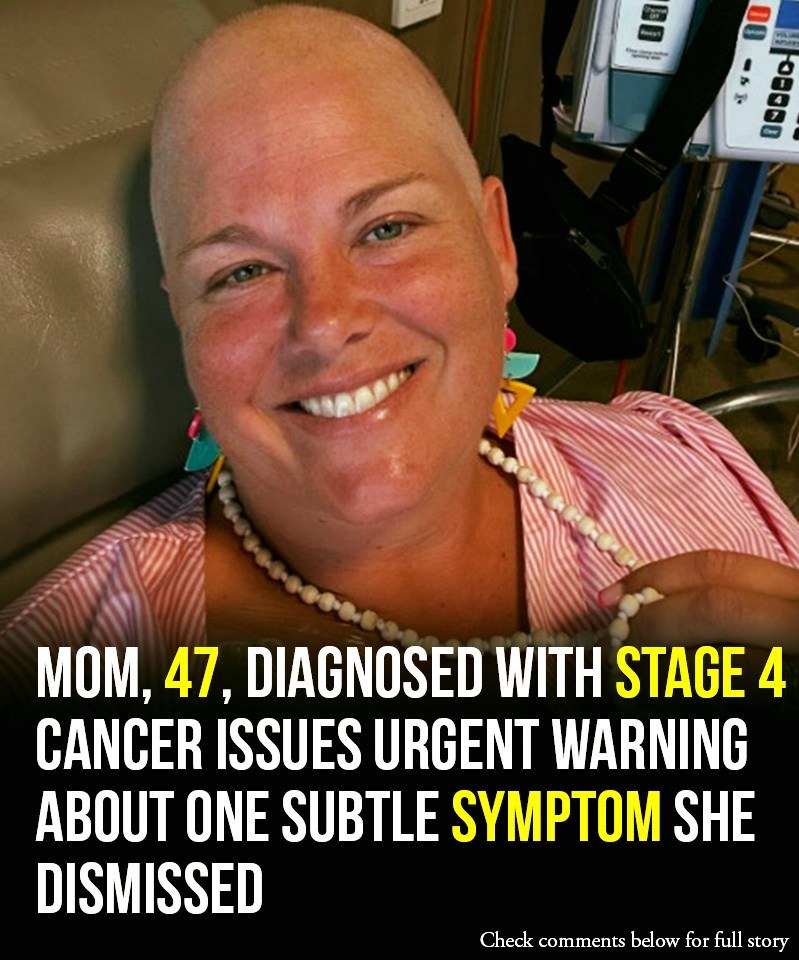
When 47-year-old Susan Schmidt, a mother of two from Australia, started feeling tired, constipated, and run-down, she thought it was nothing serious. “I just blamed it on getting older,” she says. “Maybe early menopause. Maybe stress.”
But her body was warning her — and she didn’t know it yet.
Weeks later, Susan collapsed on her bathroom floor, gripped by unbearable pain. “It was worse than childbirth,” she recalls. “I was vomiting, crawling into the shower, just trying to survive the night.” Still, she believed it was food poisoning or maybe salmonella from her horse.
Doctors ran tests. Everything looked fine. Bloodwork? Normal. Stool samples? Clear. Susan was told not to worry. But deep down, something felt wrong.
Then came the colonoscopy.
“When I woke up, I just knew,” she said. “The nurse looked different. The doctor walked in and told me they’d found a tumor.”
A CT scan confirmed her worst fear — the cancer had already spread to her uterus, pelvic lymph nodes, and right lung. It was Stage 4 bowel cancer — incurable.
“I felt my whole world collapse,” she admits. “How did I miss the signs?”
Looking back, Susan realized she’d ignored the whispers her body had been shouting for months:
-
Constant fatigue that naps couldn’t fix.
-
Strange bowel changes.
-
Abdominal pain that came and went.
She now calls it her “silent warning.”
Today, Susan is using her voice to make sure no one else stays silent. Through her Floozie Foundation, she raises awareness for bowel cancer and supports other patients fighting the same battle. “People don’t talk about bowel health — and that’s the problem,” she says. “Embarrassment can cost you your life.”
Despite her diagnosis, Susan continues treatment, traveling, and posting updates to inspire others. Her message is clear and powerful:
👉 “If something feels off — listen to your body. Don’t let anyone tell you it’s ‘just stress,’ or ‘just aging.’ It could save your life.”
Susan’s story isn’t just one of tragedy — it’s one of strength, hope, and warning. Because sometimes, the smallest symptoms are the ones that shout the loudest. 💛