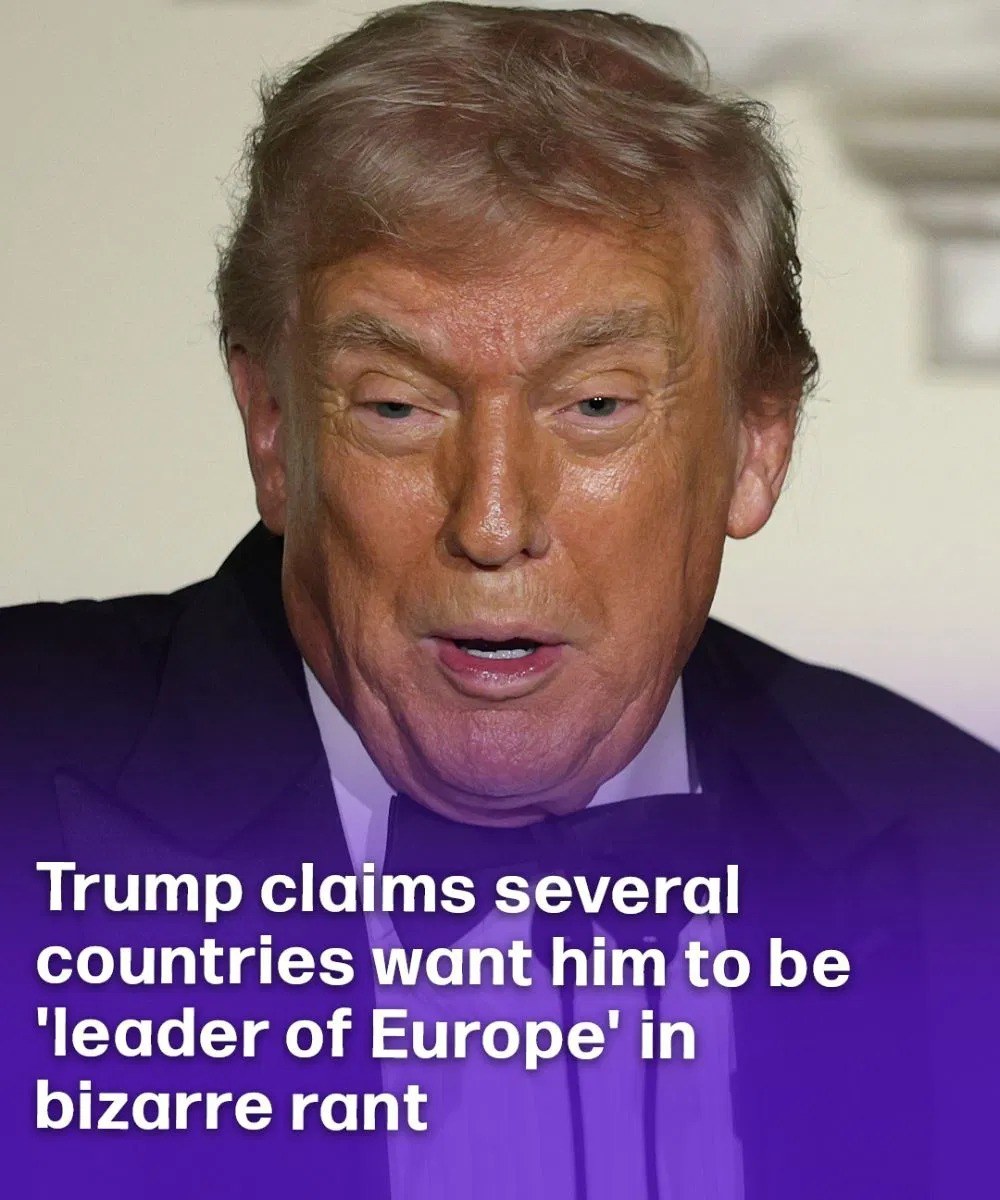
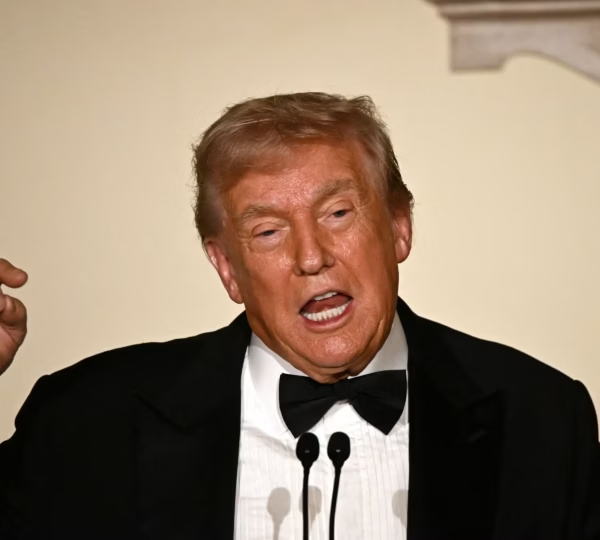
Former U.S. President Donald J. Trump sparked widespread confusion, debate, and online reaction after a remark at the White House Congressional Ball on December 11. 2025.
Suggesting that European countries view him as a leader not just of the United States, but of Europe itself.
The comment immediately went viral and ignited a flurry of interpretations, responses, and critiques around the world.
Held annually during the Christmas season, the Congressional Ball is a long‑standing White House tradition that brings together members of Congress, administration officials, and their families for a formal evening of speeches, music, and celebration.
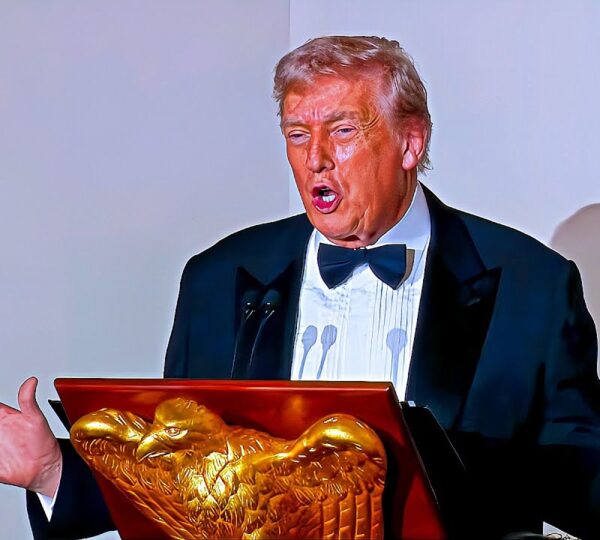
It provides presidents an opportunity to speak directly to lawmakers and highlight achievements and priorities — but this year’s remarks veered into unexpected territory.
A Holiday Speech That Took an Unusual Turn
Trump began his speech with customary holiday greetings, wishing those present a “Merry Christmas” and a “Happy Hanukkah.”
He then shifted into a review of what he described as the accomplishments of his administration — a mix of economic statistics, foreign policy highlights, and political assertions.
Among his claims, Trump touted what he said was unprecedented investment flowing into the U.S. economy, asserting that the national total had already surpassed $18 trillion and would exceed $20 trillion by year’s end — “more than any country has ever had, anywhere in the world — by four times,” he said.
He contrasted this figure with what he said was less than $1 trillion in investment during the previous administration, a point he framed as factual rather than hostile criticism.
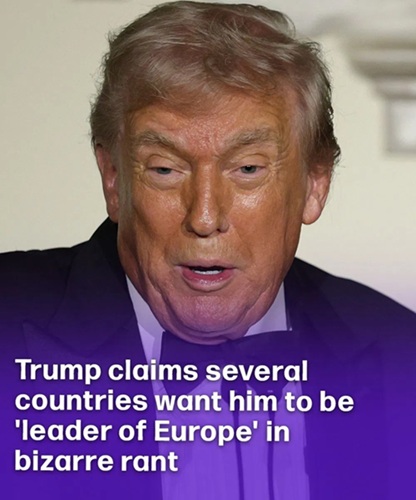
But what drew the most attention were the comments in which Trump suggested that European nations see him as a de facto leader of Europe — a striking assertion given the distinct sovereignty and political structures of individual European states.
“European countries are saying that your president might as well be the leader of Europe,” Trump said, adding that the continent “listens to us and respects us like never before.”
He went on to highlight what he described as strong relationships abroad while reiterating his long‑standing theme that the United States had been “taken advantage of” by other nations for years. “We get along with them.
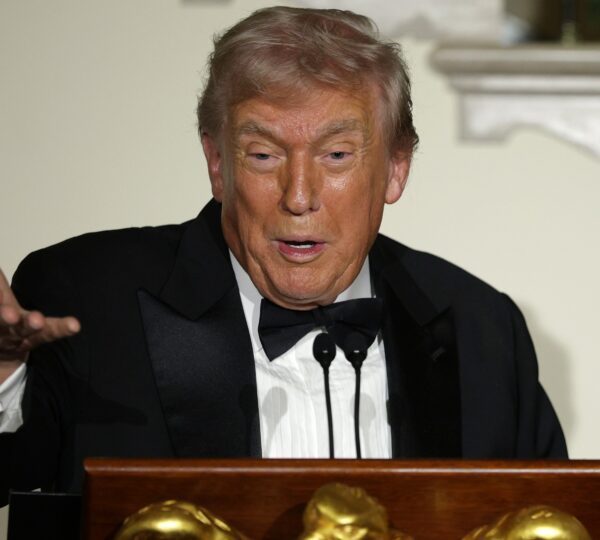
We want to get along with as many nations as possible. But we’ve been ripped off by a lot of them for a very long time,” he said.
How the Comments Spread Online
As clips of Trump’s remarks circulated on social media, reactions ranged from disbelief to humor. Users debating the validity of Trump’s claim posted everything from sarcastic remarks to critiques rooted in real global opinion.
One social media user jokingly remarked: “After countless trips to France since this guy came to power, every French person I meet just says, ‘What is America doing?’”
Another commentator from the United Kingdom echoed the sentiment, writing: “Same here. What on earth is he talking about?”
Many others pointed out that European public opinion polls have shown skepticism toward U.S. leadership under Trump’s tenure, rather than admiration or calls for him to “lead Europe.” Others simply reacted with humor, such as: “Great.
When can we drop him off in Europe?” A few outright dismissed the claim, arguing that “European nations are not reporting this. He clearly has emperor fantasies.”
A Broader Pattern of Criticism Toward Europe
Trump’s remarks at the Congressional Ball did not occur in isolation.
Days earlier, in a lengthy interview with Politico, he delivered a series of blunt criticisms of European nations and their leaders — comments that have further strained transatlantic relationships.
In that interview, he described many European countries as “weak” and “decaying,” asserting that their political correctness and immigration policies were contributing to their decline.
“I think they’re weak,” Trump said of European leaders, adding that many of them “want to be so politically correct,” a characteristic he claimed made them ineffective.
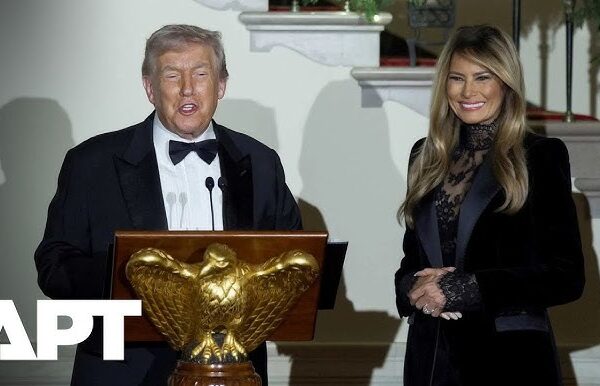
He expressed concern that if current trends continued, “many of those countries will not be viable countries any longer.” He specifically cited migration policies and broader societal issues as contributing factors.
The interview also touched on the ongoing war in Ukraine. Trump criticized European leadership for their response, claiming that although many have talked about ending the war or providing support, they haven’t produced decisive results.
He suggested that Russia holds the advantage in negotiations and at times framed Ukrainian strategy and European coordination as weak or ineffective — comments that European officials and analysts have publicly disputed.
International and European Reactions
Trump’s comments have prompted scrutiny not just in the United States but also abroad.
European officials and commentators have expressed concern, viewing the remarks as reflective of a broader shift in U.S. policy and rhetoric toward its closest allies.
Critics argue that such language undermines cooperation on shared challenges, particularly on issues of collective security and economic stability.
Some analysts describe Trump’s portrayal of Europe as “weak” as part of a broader national security strategy document released by his administration, which characterized Europe as at risk of “civilizational erasure” and warned of fragmentation and regulatory challenges.
European Commission and government officials responded critically, viewing portions of the U.S. strategy as tantamount to political interference and a departure from traditional alliances.
Beyond official reaction, media coverage in major European outlets has underscored the oddity of Trump’s “leader of Europe” comment in light of longstanding transatlantic dynamics.
European leaders have consistently emphasized the importance of multilateral cooperation, shared institutions like the European Union (EU) and NATO, and collective responses to issues such as the war in Ukraine, climate change, and economic competition — approaches that diverge from the narrative presented by Trump.
Historical Context and the Transatlantic Relationship
The United States and Europe have historically shared a deep security and diplomatic alliance since the end of World War II. NATO, established in 1949, has been central to that relationship, and in recent decades both sides have worked together on defense, economic policy, and global stability.
Trump’s rhetoric — particularly the suggestion that Europe wants a single American leader or that European nations are failing — contrasts with this history and has fueled discussion about the future trajectory of transatlantic cooperation.
Despite tension at times, European leaders have not echoed Trump’s assertion that the continent wants him to be its leader.
Public opinion surveys in several European countries typically show mixed views about the United States, with sentiments about American leadership varying significantly by generation, political orientation, and specific policy areas — and often showing more cautious views of Trump’s approach than enthusiastic support.
This divergence between Trump’s statements and public or official sentiment in Europe underlines the complexity of the issue.
Political and Diplomatic Implications
The implications of Trump’s statements extend beyond a single speech or interview.
Analysts suggest that such rhetoric could impact negotiations on defense spending, trade relations, and cooperation on global challenges like climate change, migration, and national security.
For example, debates over the ongoing war in Ukraine — where many European allies have committed extensive financial and military support — have already tested the cohesion of Western alliances.
Trump’s characterization of European responses as insufficient or ineffective has only amplified those discussions.
Additionally, domestic political landscapes in European countries can be affected when a major global leader publicly questions their competence or vision.
European governments may feel pressure to respond not just diplomatically but within their own national political debates about sovereignty, defense spending, and alignment with broader Western strategies.
This ripple effect illustrates how a single comment — such as suggesting that Europe “wants” Trump as a leader — can resonate far beyond its original speech context.
Social Media Reaction and Public Discourse
On social media platforms, the reaction to Trump’s comments ran the gamut from bemusement to sharp criticism.
Many international commentators took aim at the assertion that Europe looks to Trump as a leader, with some pointing to recent polls showing complex and often critical opinions of American leadership in Europe.
Others on platforms responded with humor, irony, or rhetorical rebuttals stressing the independence and unique political cultures of European nations.
Some observers also interpreted the remarks as part of Trump’s broader communications strategy — a blend of self‑promotion and assertive rhetoric that elicits strong responses domestically and internationally.
Whether intended to energize his political base, shift public attention to foreign policy achievements as he sees them, or provoke debate about U.S. global leadership, the comments have succeeded in generating widespread attention.
Looking Ahead: Continued Debate
As global audiences digest and respond to Trump’s statements, it’s clear that the dialogue about American leadership, European autonomy, and transatlantic cooperation is far from settled.
The assertion that European nations see Trump as a potential leader of Europe challenges established diplomatic norms and invites ongoing analysis from policymakers, commentators, and citizens alike.
What remains certain is that in an era of rapidly evolving geopolitical dynamics, pronouncements from major world leaders can have far‑reaching effects — shaping public opinion, diplomatic relations, and international policy discussions long after the speech ends.