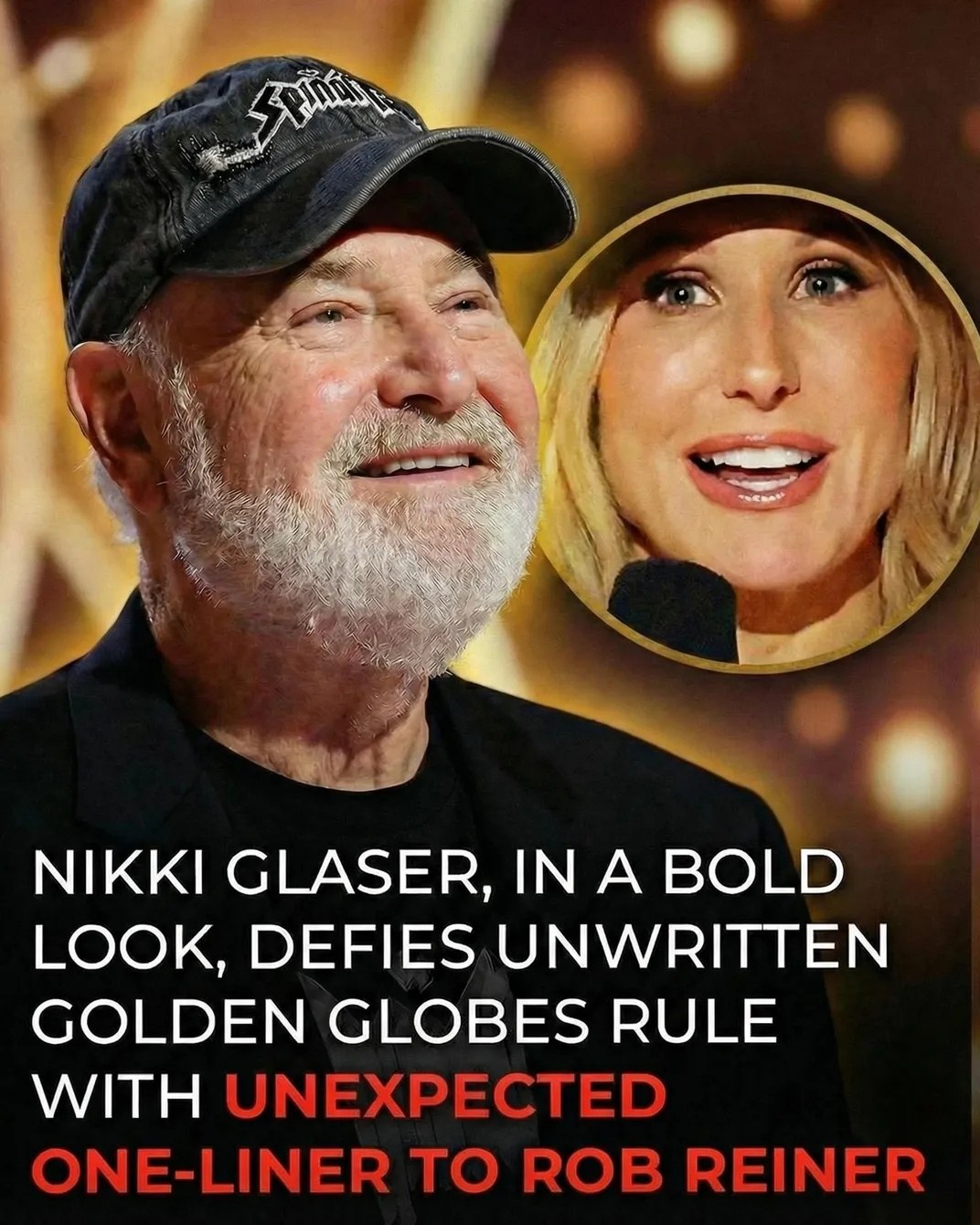
From the moment Nikki Glaser stepped onto the stage at the 83rd Annual Golden Globe Awards on January 11, 2026, it was clear that this would be a night that defied expectations.
Garnering widespread praise from critics, industry professionals, and fans alike, Glaser’s performance as host marked only the second time she had returned to the Golden Globes stage after her acclaimed debut the year before.
Unlike many awards‑show hosts whose opening sets fall into predictable territory, Glaser delivered a monologue that was both incisively sharp and broadly appealing.
Balancing incisive comedy with thoughtful poise in a way that helped shape the tone of the entire broadcast. At the heart of Glaser’s 2026 Golden Globes opening was a sense of confidence and control that immediately drew in the audience.
Both in the room at the Beverly Hilton in Beverly Hills and at home. With a commanding stage presence and a rhythm that never faltered, she delivered jokes that landed with precision, won laughs without harshness, and showcased an impressive ability to read the room while still challenging it in playful ways.
This wasn’t a host who relied on tired celebrity roast tropes or mean‑spirited barbs; instead, her humor was current, fearless, and thoughtfully constructed, earning immediate applause and lighting up social media within minutes of going live.
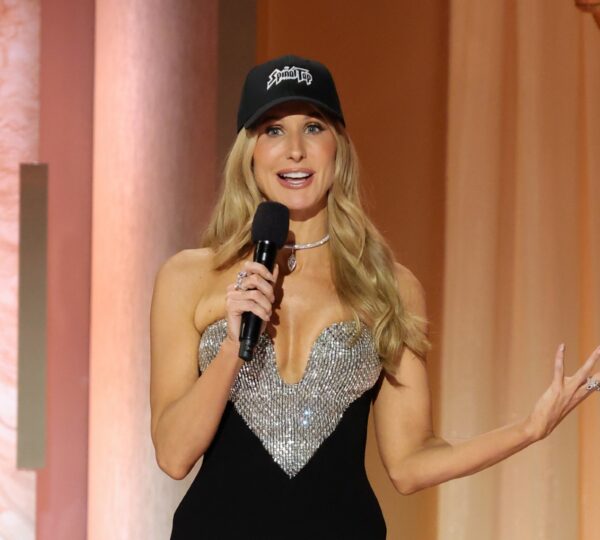
One of the defining features of Glaser’s performance was her clever navigation between roasting and toasting Hollywood’s biggest names. She managed to make bold observations about pop culture without alienating the stars in attendance.
For example, when ribbing Leonardo DiCaprio, she leaned into humor familiar from awards shows (“Countless iconic performances…
and the most impressive thing is that you accomplished all of that before your girlfriend turned 30!”), a line that celebrities such as DiCaprio himself reportedly received with a smile and a thumbs‑up.
Yet while some headlines focused on individual jokes—like her DiCaprio dig or jabs at CBS News as “America’s new place to see B.S. news”—the broader consensus was that Glaser’s approach was restraint with intention.
She consistently avoided highly divisive political humor (even joking that certain political jokes she initially considered just weren’t funny in the current climate) and opted instead for commentary that leaned on universal truths about fame, media, and celebrity culture rather than partisan targets.
This careful calibration was a big part of why so many viewers felt her opening set stood out—not merely for punchlines but for tone.
Online reactions ranged from praise for her wit to admiration for her ability to steer clear of overt controversy while still being incisive.
Fans emphasized that her timing was crisp, her barbs were clever but never cruel, and her delivery was self‑aware in a way that felt refreshing compared to more traditional awards‑show hosts.
Comments on platforms like Reddit reflected an appreciation that Glaser had “changed the entire tone of the Globes to be hilarious and entertaining,” and that she balanced humor with a degree of warmth often missing from similar gigs.
What made the evening particularly compelling was not just the stand‑up elements of the monologue, but also Glaser’s capacity to shift gears when the moment called for it.
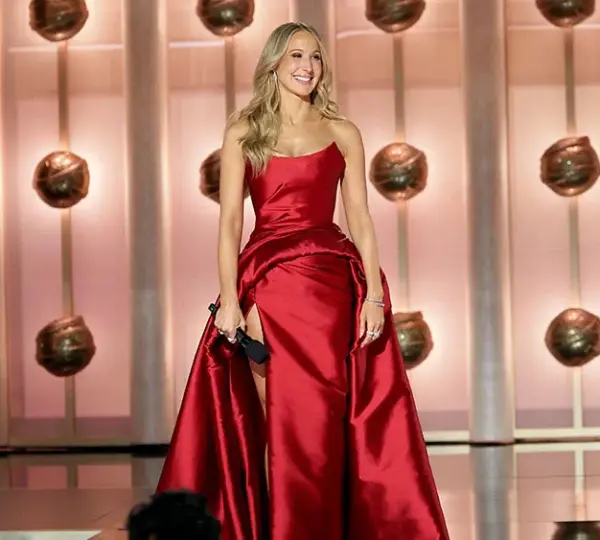
Instead of closing the night with more jokes or a return to edgier material, she pivoted to a subtle, respectful tribute to the late filmmaker and actor Rob Reiner—a nod that was emotional and understated.
As part of the closing moments of the ceremony, she donned a This Is Spinal Tap‑style cap and referenced one of Reiner’s most beloved films by quipping, “This one went to 11,” a line that managed to feel heartfelt without disrupting the celebratory flow of the awards.
That ability to navigate emotional range—from sharp comedy to sincere tribute—was significant, because it illustrated that Glaser’s role at the Globes wasn’t just about laughs or shock value.
It was about guiding the narrative of the night in a way that felt cohesive and meaningful. In comparison to many past hosts at awards shows, whose presence can sometimes feel perfunctory or tonally awkward, Glaser’s performance was purposeful and intentional, reinforcing the idea that she understands not just how to entertain, but how to frame an entire televised event.
Industry reaction was also notably positive. Critics from major outlets—who can be notoriously tough on awards‑show hosts—praised her monologue for its humor and intelligence.
Some reviews highlighted how her performance “outshined an otherwise tone‑deaf telecast,” suggesting that her presence was a key reason the night felt both lively and cohesive.
Others pointed out that her jokes, even when satirical, never crossed into gratuitous offense—a balance that many hosts strive for but few achieve.
Social media buzz followed quickly after her opening. Clips of her best lines circulated widely on platforms like X and Instagram, with fans commending her comedic timing and calling the monologue one of the most memorable Golden Globes openings in recent memory.

Discussions on Reddit and other forums reflected a sense that Glaser had managed to create moments people genuinely wanted to talk about—which, in the era of endless awards‑show commentary, is no small feat.
Part of what made this particular hosting gig meaningful was that it occurred amid a broader upswing in Glaser’s career. In recent years she has steadily expanded beyond stand‑up stages into television, film, and writing.
She has announced new projects, including upcoming streaming specials, feature film collaborations, and creative roles behind the scenes.
Notably, she teamed up with well‑known comedic filmmaker Judd Apatow for an untitled romantic feature comedy at Universal, a project that signals her expanding footprint in Hollywood’s creative ecosystem.
Her trajectory from club comedian to awards‑show host reflects years of hard work and evolution. While fans know her for her stand‑up specials and sharp comedic voice, she has also increasingly taken on roles that allow her to shape material at a structural level—writing, producing, and collaborating on narratives that stretch beyond stand‑up.
This broader creative expansion, including her work in film and television development, signals a transition from performer to multi‑dimensional entertainment creator.
Notably, the Golden Globes hosting duties themselves have become a milestone in her career—especially because she was asked back for a second consecutive year, a rare vote of confidence from producers and organizers.
Her first hosting stint at the 82nd Golden Globe Awards in 2025 already made headlines as she worked to reset the tone of the show after a poorly received opening the year before.
That earlier monologue featured jokes about Hollywood’s beauty trends and self‑deprecating humor and was widely seen as injecting energy into the ceremony.
Returning for the 2026 show, Glaser elevated that foundation, demonstrating growth in her craft, a deeper understanding of her audience, and an ability to blend comedy with reverence, a rare combination in awards‑show hosting.
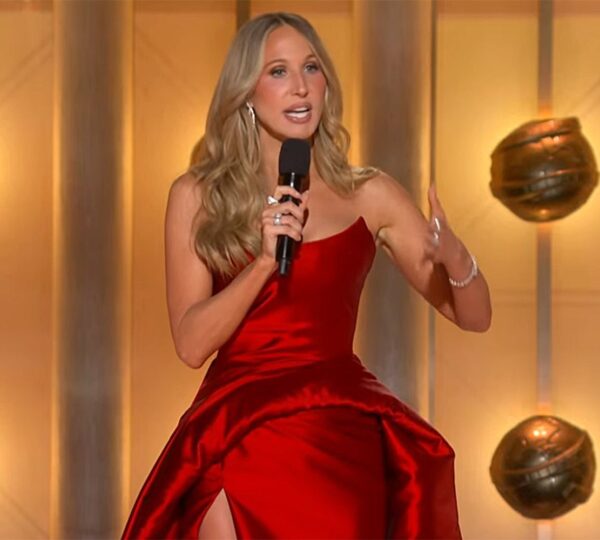
Her navigation of the material felt informed by experience—balancing the risk of an edgy joke with the reward of insight, and knowing when to cut material that might overshadow the evening.
Indeed, in interviews after the Globes, she revealed that several jokes she had prepared—including political barbs and incisive celebrity treatments—were intentionally left offstage because they didn’t fit the tone she wanted for that night.
Critics observed this strategic restraint as one of her strengths. Rather than relying on shock value or controversy for its own sake, Glaser focused on humor that was inclusive, accessible, and often metafictional—jokes that commented not just on celebrities but on celebrity culture itself, including the nature of awards shows and media narratives.
Some of her most quotable lines were about Hollywood’s self‑importance (“a list that has been heavily redacted!”) or insider nods to editing controversies, uniquely blending industry satire with mainstream appeal.
This blend of smart comedy and emotional intelligence is part of what made Glaser’s Golden Globes performance resonate so widely.
Whether audiences were laughing at her clever quips about Hollywood trends or appreciating her respectful tribute to a beloved filmmaker, she consistently demonstrated narrative awareness—structuring her set in a way that felt almost like a stand‑up special lifted into a major awards‑show context.
In the aftermath of the broadcast, many fans and commentators suggested that her performance raised the bar for future awards‑show hosts.
On social media, viewers echoed that sentiment, noting that Glaser wasn’t just funny—she was present, adaptable, and in command of the stage from start to finish.
Comments ranged from humor appreciation (“She made every joke feel fresh”) to admiration for her authentic voice (“She’s not trying to be anyone else”), with many arguing that she had carved out a space for a new kind of awards‑show hosting style—one grounded in sharp observation, audience respect, and comedic precision.
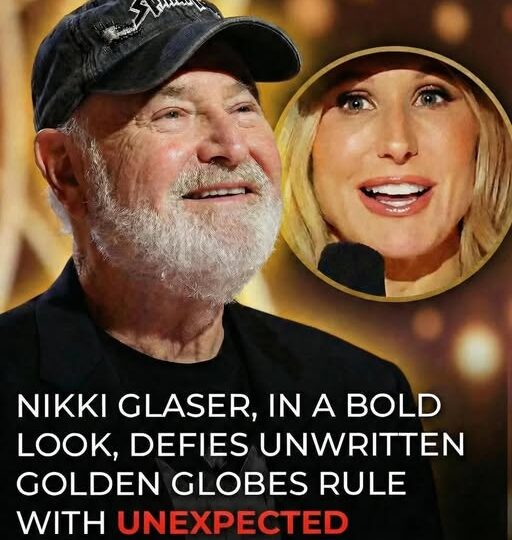
Ultimately, Nikki Glaser’s Golden Globes appearance was more than just a successful monologue; it was a cultural moment. It underscored her growth as an entertainer, her capacity to handle high‑stakes live television with agility, and her ability to anchor an entire night of celebration with wit, warmth, and intelligence.
If the opening moments of the 2026 Golden Globes were any indication, Nikki Glaser’s influence in comedy and entertainment—already significant—is poised to continue expanding in the years ahead.