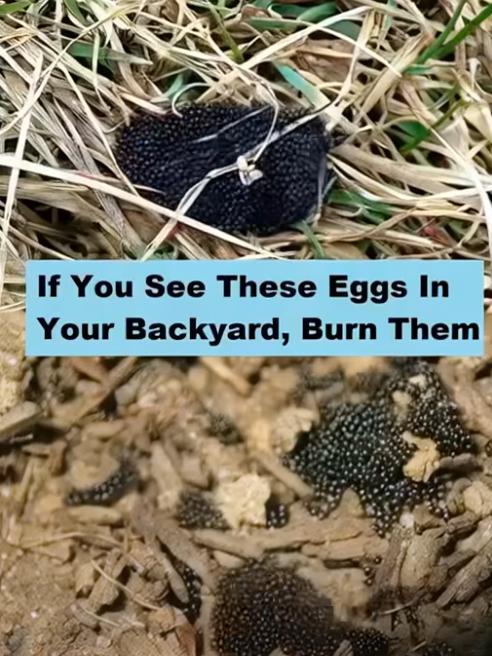
They’re small. Almost invisible. But if you spot tiny, shiny clusters in your backyard—each no bigger than a poppy seed—you might be looking at tick eggs, and that’s a serious warning sign. While they might seem harmless at first glance, those little dots could soon hatch into hundreds of disease-carrying ticks capable of spreading Lyme disease, Rocky Mountain Spotted Fever, and other dangerous infections.
Tick eggs are usually oval-shaped, glossy, and pale yellow to brown, blending perfectly with dirt, leaves, and grass. They’re often laid in clusters near shaded, moist areas—under bushes, in piles of leaves, or along fence lines. One female tick can lay up to 5,000 eggs at once, meaning a single hidden cluster could turn your backyard into an infestation zone.
If you find them, don’t crush or sweep them away. Doing so can spread potential pathogens. Instead, experts recommend calling pest control or your local veterinarian for safe identification and removal. If you must handle them yourself, wear gloves, use tweezers, and place the eggs in a sealed bag or container of alcohol before disposing of them.
Prevention is everything. Keep grass short and trimmed, clear leaf litter, and avoid dense ground cover where ticks thrive. Remove plants that attract deer—like tulips and hostas—and consider adding tick-repelling herbs like mint or rosemary. You can also use cedar oil sprays, diatomaceous earth, or tick tubes for natural control.
Managing wildlife access to your yard—especially deer, birds, and rodents—can further break the tick life cycle. And when spending time outdoors, wear protective clothing, apply repellent, and always check yourself, children, and pets afterward.
Ticks are more than a nuisance—they’re a health threat. Spotting and removing tick eggs early could save you from an infestation and protect your family from disease.