When Carla boarded her flight, she hoped for a calm, uneventful trip home. Her face, still healing from a recent accident, bore visible scars that made her self-conscious. She kept her head down, slipped on her headphones, and prayed for a peaceful flight, wishing other passengers would focus on the journey—not her injury.
But peace didn’t last. A couple sat beside her, and tension quickly escalated. The man muttered loudly, “Can you believe this? We’re paying for this flight, and this is what we get?” His girlfriend covered her nose with her sweater, glaring at Carla.
Carla’s heart raced as he leaned closer. “Can’t you cover that up or move? It’s disgusting!” The woman added, voice sharp, “I can’t even look at her. I’ll throw up.” Carla froze, unable to respond. Fear and humiliation gripped her, making every heartbeat feel unbearable.
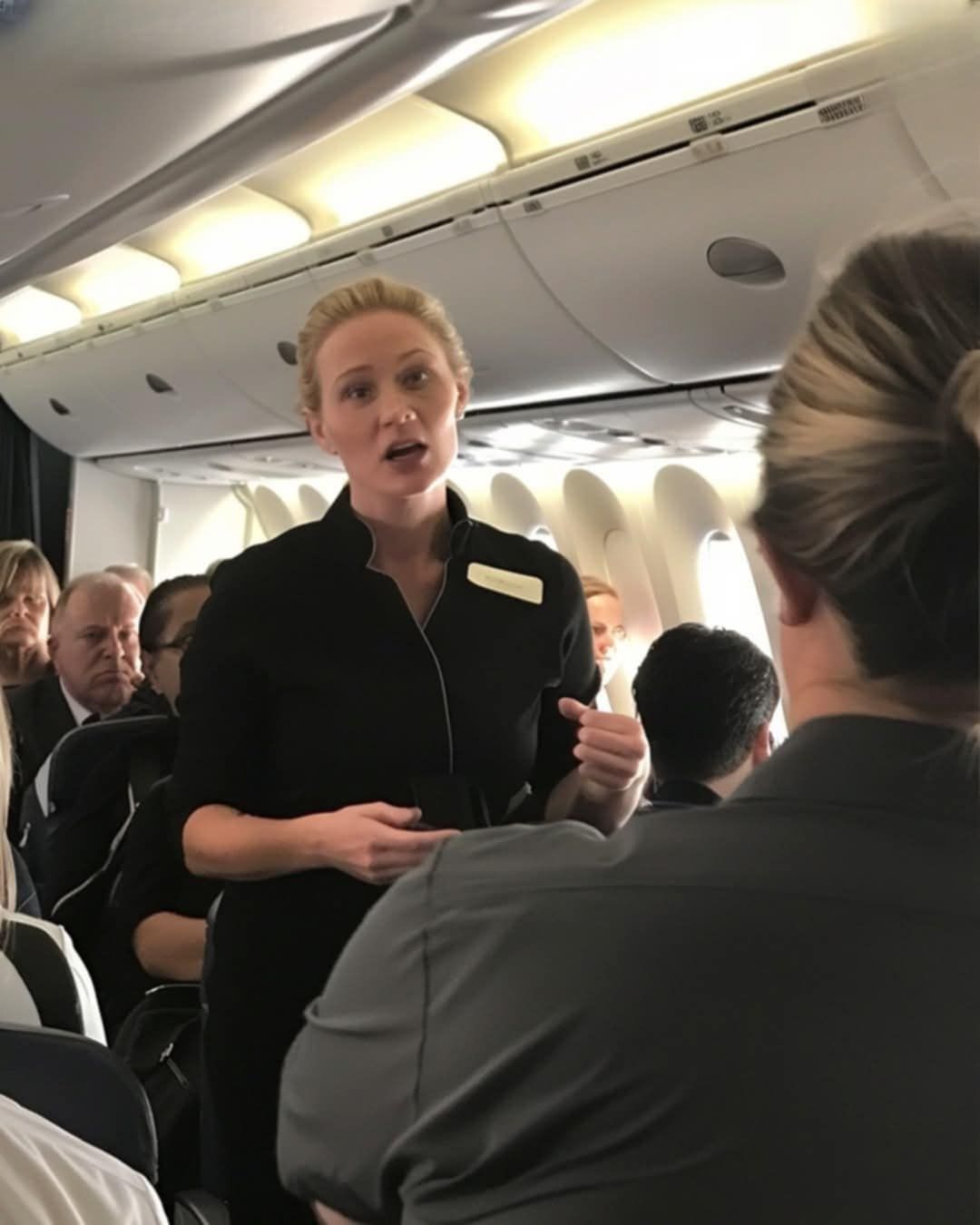
Thankfully, the flight attendant noticed immediately. Calm, professional, and firm, she approached the couple. “Sir, ma’am, this behavior is unacceptable,” she said. “All passengers are entitled to their seats, and harassment will not be tolerated.”
Before they could argue, the captain’s voice came over the intercom. “Ladies and gentlemen, every passenger deserves respect. Harassment or discrimination will not be allowed on this flight. Please treat your fellow travelers with dignity.” Heads turned. Whispers filled the cabin. Relief washed over Carla.
Moments later, the flight attendant returned. “Mr. and Ms., please move to seats 22B and 22C at the back. This is not optional.” The couple grumbled but complied. Quiet applause broke out, and Carla’s chest felt lighter.
The attendant smiled warmly. “Miss, we also have a business class seat available. Please let us take care of you.” Carla nodded, settling into her new seat. With a cup of coffee and a small bag of cookies, she finally relaxed. Looking out the window at the clouds below, she felt something she hadn’t in weeks: hope. Safe. Respected. And seen for who she was, not her scars.