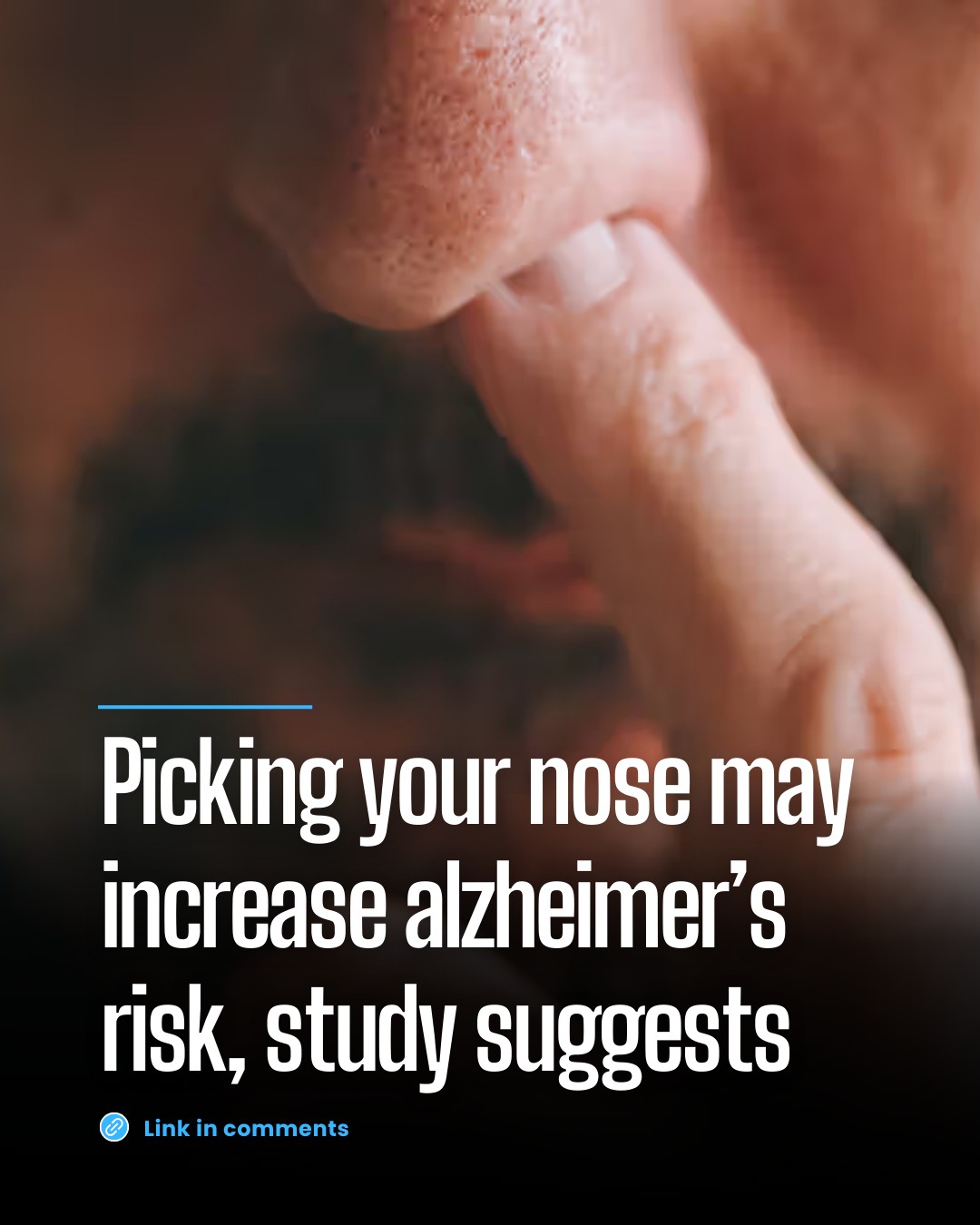
Picking your nose may increase alzheimer’s risk, study suggests
According to researchers, scratching the inside of your nose can damage tissue and create an easier pathway for dangerous bacteria to reach the brain. The body’s response to these bacteria can resemble the changes seen in Alzheimer’s disease, Science Alert reports.
The study, published in Scientific Reports in 2022, was conducted by scientists at Griffith University in Australia using a bacterium called Chlamydia pneumoniae. This bacterium can cause pneumonia and has been found in the brains of many people with late-stage dementia.
In experiments with mice, researchers showed that the bacteria were able to travel from the nasal cavity to the brain through the olfactory nerve. When the protective tissue inside the nose (the nasal epithelium) was damaged, the infection became more severe, leading to the buildup of beta-amyloid protein—the same protein found in large amounts in Alzheimer’s patients.
“We are the first to show that Chlamydia pneumoniae can travel directly from the nose to the brain and cause changes that look like Alzheimer’s disease. We saw this happen in mice, and the evidence is potentially concerning for humans as well,” said neuroscientist James St John.
The infection in mice developed very quickly, within 24 to 72 hours. Researchers believe the nose may act as a “fast track” for bacteria and viruses to reach the brain.
Although it is still unknown whether the same process occurs in humans or whether beta-amyloid plaques actually cause Alzheimer’s, St John emphasized that further studies are needed.
“We need to conduct this research in humans and confirm whether this pathway works the same way. We know these bacteria exist in people, but we don’t yet understand exactly how they get there,” he said.
Nose picking is far from rare—some studies suggest that up to nine out of ten people do it, along with certain animals. However, researchers warn that “picking your nose or pulling out nasal hairs is not a good idea” because it can damage protective tissues.
One unanswered question is whether the buildup of beta-amyloid is actually a healthy immune response that disappears once the infection clears.
“After the age of 65, the risk of Alzheimer’s increases significantly, but we are also seeing other causes. It’s not just age—environmental factors play a role too. And we believe bacteria and viruses are critical factors,” St John added.