When Canada’s winter rolls in, the air bites, snow piles high, and survival becomes more than a matter of comfort—it’s a daily battle against the cold. For those struggling with homelessness or financial hardship, even a warm coat can mean the difference between danger and safety.
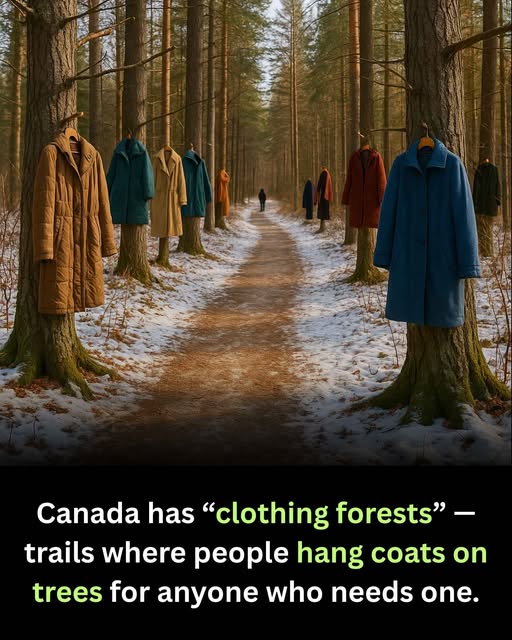
But out of this frozen hardship, a quiet revolution of kindness has taken root—literally. Across cities and small towns, trees are being “dressed” for winter. Coats, scarves, mittens, hats, and even boots dangle from branches like ornaments of compassion. Locals call them “clothing forests.”
Each piece of clothing comes with an unspoken message: “If you need it, it’s yours.”
There are no donation boxes, no forms to fill out, no judgment. Just trees turned into open-air wardrobes—free warmth for anyone who needs it.
What began as a small, grassroots idea has blossomed into a nationwide movement of empathy. Schools, churches, and neighborhoods host “clothing walks,” where volunteers hang new items and leave handwritten notes of encouragement. Others check the trees weekly, making sure garments stay dry and fresh. Some cities have even added waterproof bins for socks and gloves—because no act of care is too small when temperatures plunge below freezing.
The beauty of clothing forests lies in their simplicity. They remove all barriers—no waiting lines, no red tape—just pure, accessible generosity. And in that simplicity, they restore something deeper: dignity.
For those who stumble upon a warm jacket on a cold night, it’s not just fabric. It’s proof that someone, somewhere, cares.
These “forests” aren’t just warming bodies—they’re warming hearts. They’re a reminder that even in the harshest cold, humanity’s kindness burns bright.
So, the next time you see a coat hanging from a snowy branch, don’t just see it as clothing—see it as hope fluttering in the wind. Because sometimes, the smallest acts of warmth can make an entire city feel a little less cold.