
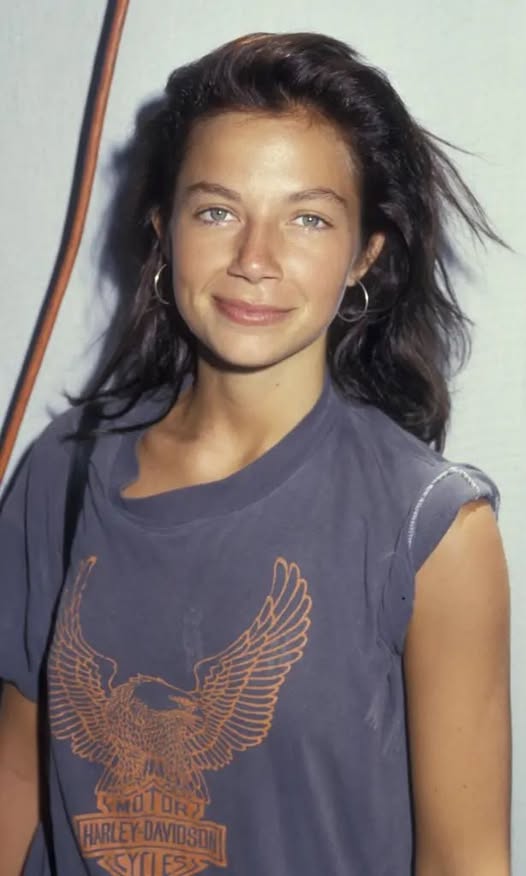
In the neon glow of 1980s Hollywood, Justine Bateman wasn’t just famous — she was iconic. As Mallory Keaton on Family Ties, she was the girl everyone loved: the charm, the smile, the effortless presence that made her one of the era’s brightest stars. Her face was everywhere — magazine covers, talk shows, red carpets. She defined a generation.
But fame has a way of turning on people… especially women.
Years later, as Hollywood shifted into a world obsessed with filters, fillers, and forever-youth, Justine found herself under a different spotlight — one that cared less about her talent and more about her face. Strangers online picked her apart. Headlines questioned why she wasn’t “fixing” herself. The pressure was suffocating.
Most people would’ve broken under it.
But Justine did something revolutionary.
She didn’t run to a surgeon.
She didn’t apologize for looking human.
She simply chose to age — naturally, unapologetically, bravely.
And Hollywood didn’t know what to do with that.
She started speaking out, calling out society’s obsession with youth and the brutal double standards that praise “distinguished” aging in men while expecting women to freeze themselves in time. She reminded the world that wrinkles aren’t flaws — they’re stories. Proof of laughter, pain, lessons, life.
Her honesty hit a nerve.
Women who had spent years feeling “less than” because of a changing face suddenly felt seen. Younger girls realized aging wasn’t something to fear. And her book, Face: One Square Foot of Skin, became a rallying cry against the toxic pressure to stay forever young.
Justine didn’t judge those who chose enhancements — she simply insisted that choices should come from self-love, not fear.
Today, she stands as one of Hollywood’s most unexpected heroes:
real, raw, and completely unwilling to shrink for anyone.
In a world edited beyond recognition, Justine Bateman became something shockingly rare:
A woman who let herself be human — and showed the rest of us that aging isn’t a failure… it’s a privilege. 🌿✨